Smart Investing in DC and Northern Virginia Real Estate
April 2, 2026
April 2, 2026
If you are thinking about building a real estate portfolio across Washington, DC, and Northern Virginia, it is easy to treat the region like one market. People often live, work, and move across the same job centers, transit lines, and housing searches. But when you invest here, the legal rules, tax structure, and property mix can change fast once you cross a jurisdiction line. That is exactly why understanding both sides of the border matters, and why a smart strategy starts with the right map. Let’s dive in.
The DC and Northern Virginia corridor functions like one broad demand region in many ways. Commuters move between job centers, renters often search across multiple jurisdictions, and buyers compare neighborhoods and property types on both sides of the Potomac.
At the same time, the housing stock is not uniform. According to U.S. Census QuickFacts for DC, the District has 368,736 housing units and an owner-occupied rate of 41.5%. In Fairfax County, there are 433,456 housing units and a much higher owner-occupied rate of 68.6%, while Arlington remains heavily renter-oriented.
That difference matters for investors. In simple terms, DC and Arlington tend to support more renter-focused strategies, while Fairfax often leans toward longer-term suburban ownership patterns. Alexandria sits somewhere in between, with an urban format and transit access that can support multiple investment approaches.
The biggest mistake many investors make is assuming regional demand means operational simplicity. It does not. The same portfolio strategy can look very different once you factor in licensing, inspections, rent rules, transfer taxes, and exit timelines.
DC has the most layered compliance structure in this group. Virginia is generally more lease-driven and more standardized, but Arlington, Alexandria, and Fairfax still have local tax and operating rules that affect your numbers.
This means your underwriting cannot stop at price, rent, and location. You also need to account for holding costs, compliance steps, and how easy or hard it may be to sell later.
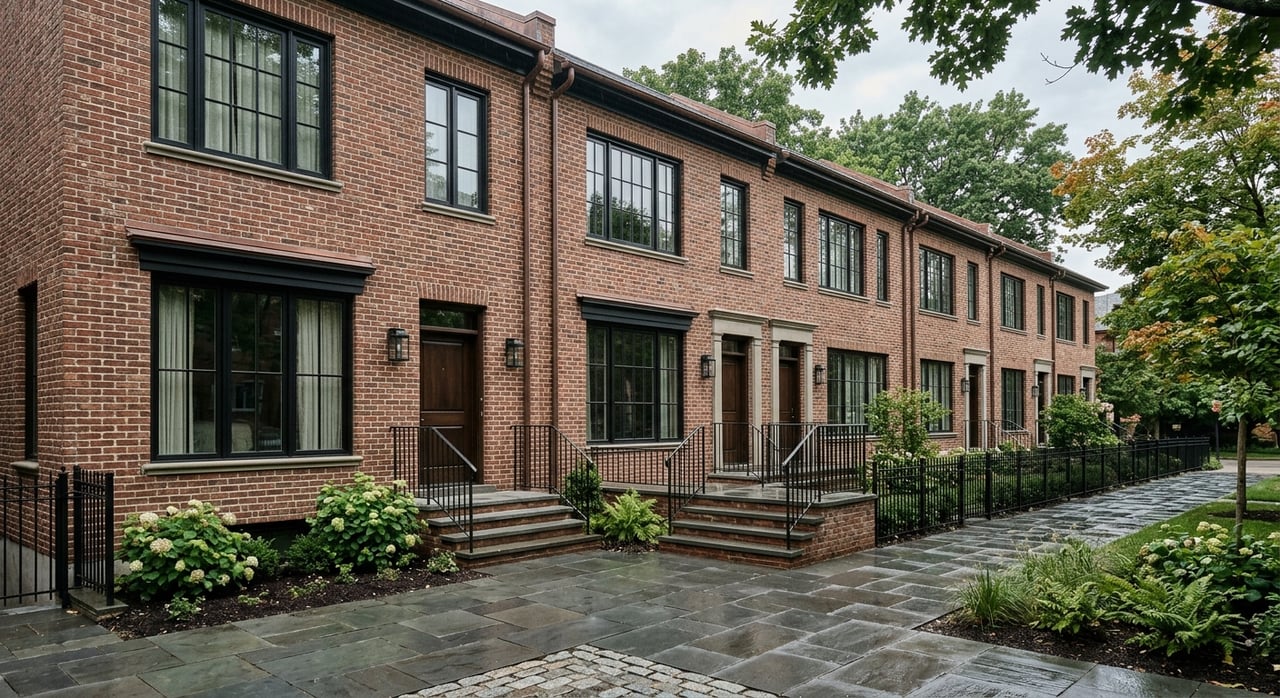
The District is the most apartment-heavy market in this mix. Official planning materials show roughly 129,000 apartment units, about 93,500 single-family homes, and around 63,900 condominiums in the city’s housing stock, according to DC planning data.
That mix helps explain why DC can be a strong fit for condos, rowhouses, and small multifamily rentals. The city’s median owner-occupied home value is $737,100, which gives useful context if you are comparing urban acquisition opportunities.
For many investors, DC works best when you are prepared for a more detailed compliance process and a longer hold strategy. It can be attractive, but it usually rewards careful planning.
Arlington is more balanced than DC, but it still has a strong rental profile. County materials note that renters occupy 62.6% of occupied housing units, and the average 2024 apartment rent was reported at $2,549.
The same profile materials report an average detached single-family home value of about $1.23 million. That creates an interesting split, where transit-oriented condos, apartments, and higher-end attached housing may offer stronger alignment with the market than detached rentals in some cases.
If you want exposure to a renter-heavy Virginia market with strong urban connectivity, Arlington often deserves a close look.
Alexandria offers a mix of product types and strong transit access. The city reports an average existing residential property value of $729,925 for 2025, including average values of $1,001,336 for single-family homes and $447,612 for condominiums.
The city also distinguishes between single-family, two-family, townhouse, and multifamily dwellings in its zoning materials, which matters when you are evaluating how a property may operate today and how it may fit your future exit plans. Alexandria’s location inside the Beltway and its five Metro stations help support demand for smaller urban rentals and condos.
For investors who want a middle ground between DC density and Fairfax suburban scale, Alexandria can be a very practical part of a cross-border portfolio.
Fairfax County is the most suburban and owner-heavy market in this group. The county’s Census profile shows 433,456 housing units, a 68.6% owner-occupied rate, a median owner-occupied value of $732,800, and a median gross rent of $2,230.
Long-range planning also points toward a future 40% single-family, 20% townhome, and 40% multifamily mix by 2050, as noted in regional housing trend materials referenced by DC planning. That suggests Fairfax can offer a useful balance of lower-turnover suburban product and selective multifamily opportunities near major job and transit nodes.
If your investment goals lean toward steadier suburban demand, Fairfax may play a different role than DC or Arlington, but an important one.
DC is the most compliance-heavy part of a cross-border portfolio. Landlords must obtain and maintain a Basic Business License, register rental accommodations with DHCD/RAD, and ensure the rental use matches the required certificate of occupancy, according to DC licensing guidance.
That registration issue is especially important. DC states that all rental units must be registered with RAD, and unregistered units are treated as rent-stabilized unless an exemption is approved. For many non-exempt units, rent increases are generally capped at CPI-W plus 2% or 10%, whichever is less, as outlined in the District’s rent adjustment rules.
If you are underwriting a DC deal, you need to verify the unit’s registration and rent-stabilization status before you assume future income growth.
The District also has sale-related rules that can affect your exit strategy. The Tenant Opportunity to Purchase Act and DOPA framework can create extra notice requirements, legal steps, and timing considerations, especially for rental housing.
This does not mean DC is off-limits for investors. It means you should expect more lead time and more coordination if you plan to sell. In many cases, your disposition strategy needs as much attention as your acquisition plan.
On the tax side, DC taxes residential real property at $0.85 per $100 of assessed value for Class 1A. The District also imposes deed recordation and deed transfer taxes of 1.1% below $400,000 and 1.45% above that threshold.
Vacant and blighted property can be taxed at much higher rates, which can materially affect value-add projects if work stalls or occupancy is delayed. That is another reason conservative timelines matter in DC.
Virginia is generally easier to model from a lease and exit standpoint, but that does not mean every locality works the same way. Under the Virginia Residential Landlord and Tenant Act, either party may terminate a month-to-month tenancy with 30 days’ written notice unless the lease says otherwise, with 60 days’ notice required in certain large multifamily non-renewal situations.
That framework often gives Virginia holdings more flexibility than DC. It can support faster turnover, cleaner lease transitions, and in some cases, a simpler path to sale.
Virginia also has a more standardized recordation structure. State law allows recordation tax at 25 cents per $100 of consideration or value, with local recordation taxes permitted at one-third of the state amount.
Arlington requires attention at both the business and tax level. The county states that the VRLTA applies to rental dwellings, and landlords collecting $10,000 or more annually in rent must obtain an Arlington County business license.
Arlington’s CY 2025 real estate tax rate was $1.033 per $100 of assessed value. The county’s assessment data also show continued residential appreciation, which can affect both acquisition pricing and future tax exposure.
Alexandria adds a distinct local operating layer. The city’s real estate tax rate is $1.135 per $100 of assessed value, and it applies a BPOL tax for renting residential property at $0.50 per $100 of gross receipts.
The city’s Residential Rental Inspections Program can also require registration and inspections. Multifamily buildings over 10 units are inspected on a 10% sample basis, and compliant properties may receive a four-year Certificate of Compliance.
For investors, that means your operating checklist in Alexandria should include both recurring tax items and inspection-related timing.
Fairfax County is often simpler from a housing-law standpoint than DC, but tax planning still matters. The county’s adopted FY 2026 real estate tax rate is $1.1225 per $100 of assessed value, and 2025 assessments showed an average residential increase of 6.65%, with the average home assessment at $794,235.
That kind of appreciation can support long-term value growth, but it also affects annual ownership costs. If you are building a portfolio here, tax assumptions should be updated regularly.
A strong cross-border portfolio usually works best when each jurisdiction has a clear job to do. Instead of trying to buy the same product in every market, it often makes more sense to match the property type to the local housing mix and operating environment.
A practical framework may look like this:
This approach is not a government recommendation. It is a practical inference based on the housing stock, value data, tax structure, and operating rules in the source material.
Before you make offers across DC and Northern Virginia, watch the details that most often affect returns:
These are not minor administrative issues. They can directly affect your cash flow, hold period, renovation timeline, and exit options.
In a market like this, local guidance is not just helpful. It is part of the strategy. A cross-border buyer should ideally have local legal counsel, a CPA who understands multi-jurisdiction real estate taxes, and a property manager who knows each area’s licensing, registration, and inspection requirements.
The right real estate advisor can help you narrow the search, compare opportunities across jurisdictions, and think through the tradeoffs between flexibility, appreciation, cash flow, and operational complexity. If you want to build a portfolio that works on both sides of the DC line, Leah Webster can help you evaluate opportunities across Alexandria, Arlington, Fairfax, and Washington, DC with a practical, wealth-building approach.
Stay up to date on the latest real estate trends.




With over twenty years of experience in real estate, I am proud to be your full time real estate partner. I can help you find property in the toughest of markets and personal situations. I will represent your investment with integrity to net you top dollar, no matter the market conditions.